Posts

Showing posts with the label Unit 30- camera and lighting techniques

My British New wave film.

Image
  Contextual film idea In my film I want to show a realistic depiction of how the current epidemic has seriously effected unemployment and how this can effect the poorer/working class people of the UK. I will start off with an audio clip of a phone call alerting the protagonist of the fact that she is being made redundant. I will then cut to a close up of the protagonist reading an eviction notice. Shortly after a loosely scripted internal monologue will begin to play over a long tracking shot of the protagonist walking through town centre and handing/posting her CV to various businesses, this is to allow the audience to empathise with her stress and worry about becoming homeless. Later I will show footage of the protagonist and her daughter using unhealthy coping mechanisms such as drinking and smoking and I will use an audio clip resembling ears ringing getting louder as the video goes on, this is to simulate the pain and discomfort that the situation that was forced upon them ha...
Aperture

Image
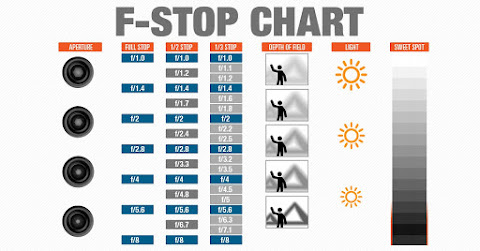
  What is aperture? Aperture is the setting that controls the depth of field as well as the amount of light that enters your cameras lens. There are three factors to take into account that affect your aperture; focal length, focal distance and f-stop. When using a higher aperture such as f/16, the lens will be more narrow and therefore allow less light in. The higher the aperture is, the deeper the depth of field will be, which means more of the shot will be in focus. Where as when using a lower aperture such as f/2.8, the lens will open more and therefore allow more light in. The lower the aperture is, the shallower the depth of field will be, meaning the foreground of the shot will be in focus but the background will be blurred. Lower apertures such as f/2.8 are used for mainly close ups where the focus of the viewer needs to on something specific. Medium apertures such as f/8 are used for mid shots and wide shots so as the subject and their actions may be in focus, but the viewe...

Health and safety

Health and safety is one of the most essential things to consider when using a studio within film. A risk assessment is a fundamental part of managing health and safety and aids to identify and manage the hazards presented by the environment you plan to use. To successfully complete a risk assessment, you must allow time to analyse any areas/equipment you will use to decide what hazards they present, assess the risk of the people being exposed to said hazards and finally, find ways to remove or control said hazards. Before I used the studio, I did a short risk assessment to ensure the room was safe to be in and the equipment was safe to use. Upon entering the room, I first identified all potential hazards and assessed the risk of exposing people to them. I then came up with ways to reduce the risk of these hazards as much as possible, allowing the studio to be safely used. Here is what my risk assessment entailed: Loose cables Loose cables were on the floor, this may lead to people usi...

Three-Point Lighting Setups

Image
 Three-point lighting is a commonly used method for lighting up a specific subject in a scene with light sources from three specific points. These three lighting types are backlight, fill light and key light. Image taken from:   Flex Clip Key Light: Key light is the most intense source of light on scene and is therefore the primary light source for the scene. The key light would be set up before the backlight or fill light and is used as the base foundation for the lighting of the scene and can be changed in multiple ways to create different effects such as positioning the light source at different lengths from the subject and at different angles to create different types of contrast and shadows . However, the most important role of the key light will always be to allow correct exposure. Backlight: The backlight hits the subject from behind and is usually placed higher than the subject. The backlights main function is usually to separate the subject from a darker background an...

Shutter speed

Image
 Shutter speed, in photography and film, is used to control how movement and motion is perceived by the viewer of said video or photograph. There is, however, a difference between how shutter speed is used and how it effects film and photography. For example in photography, if you were to use a low shutter speed of 1/4  and take a photo of an object moving, the photo will contain a large amount of motion blur and details will be un clear, where as a high shutter speed of 1/500 will take a more clear, concise image that will make the object look like it was still when the image was taken. Whilst in film, the shutter speed does still effect mostly the motion blur, you are more limited on what shutter speed you can use as, to achieve a natural movement look, the shutter speed should always be set to double the frame rate (frames per second) the standard frame rate used in film making is usually around 25 FPS making the shutter speed automatically 1/50. Setting too high of a shutt...

Dolly Zooms

Image
  A dolly zoom is where the camera zooms in or out on a subject whilst the camera moves towards or away from the subject; the effect that this aims to create is that the subject should stay the same size but the background compresses/decompresses around them. A good example of this is poltergeist where the character seemingly stays the same size but the setting decompresses, this gives the effect that the hallway grows longer, adding to suspense of the scene. The most well known example of a dolly zoom is the infamous scene from jaws, it is used to show that the character is having an extreme realisation.

camera lenses and their effect.

Image
  Wide angle lenses The range of these lenses are normally 16-35mm. They allow you to fit more in frame of shot and are therefore good for shooting things such as establishing shots (e.g landscapes) because of the amount able to fit in shot helps to establish time, context and location. This establishing shot (from 0.00-0.41) uses a wide angle lens to fit more landscape in shot. This immediately shows that the movie will be set far back in the past due to the landscape type, little amount of people and the type of people that are around.  Zoom lenses Zoom lenses are able to vary their focal length by moving optical mechanisms in the lens. These lenses are used predominantly for dolly zooms and for making the subject appear to be moving closer or further away without actually moving them.  This scene effectively uses dolly zoom to enhance the building of suspense. It gives the impression that even though the character isn't moving, the door is getting further away, further...

ISO

Image
 Within photography, ISO is the sensitivity to light of the camera sensor. Whereas in camera film, ISO depends on the  films sensitivity to light. The use of a higher ISO (e.g 800) will enable the shot to be exposed. Where a lower ISO (e.g 100) will create an under-exposed shot. However, relying on ISO to expose your image can greatly change the quality of them, the higher the ISO the more grain is created. Noise in film can, however be positively used. Some horror production may use noise to create a hand held feel and more suspense. My Examples

Lighting equipment and setups that would be used for the following scenarios:

  A small documentary where portability is paramount Lighting- For a documentary where portability is important, lighting equipment that uses batteries rather than wired equipment would be ideal. A good example of this is LED lights  LED panels would be good as the bigger the panel, the softer the light. However you would need a CRI of 90-95 or better so as to match correctly with skin tones. As portable documentaries often rely on natural lighting as well, a reflector would be useful to further the quality of the shots. The gold reflector creates warm, natural fills which are used for sunsets and portraits. Where as white produces a neutral coloured bounce light that is good for fill lighting. Silver increases highlights and increases contrasts this is ideal for product shots and black and white filming. Black is used to either block or subtract light and translucent may be used to diffuse light, this is ideal for creating a soft effect. Equipment- As portability is paramount...

How and Why lighting affects camera techniques for moving image

Image
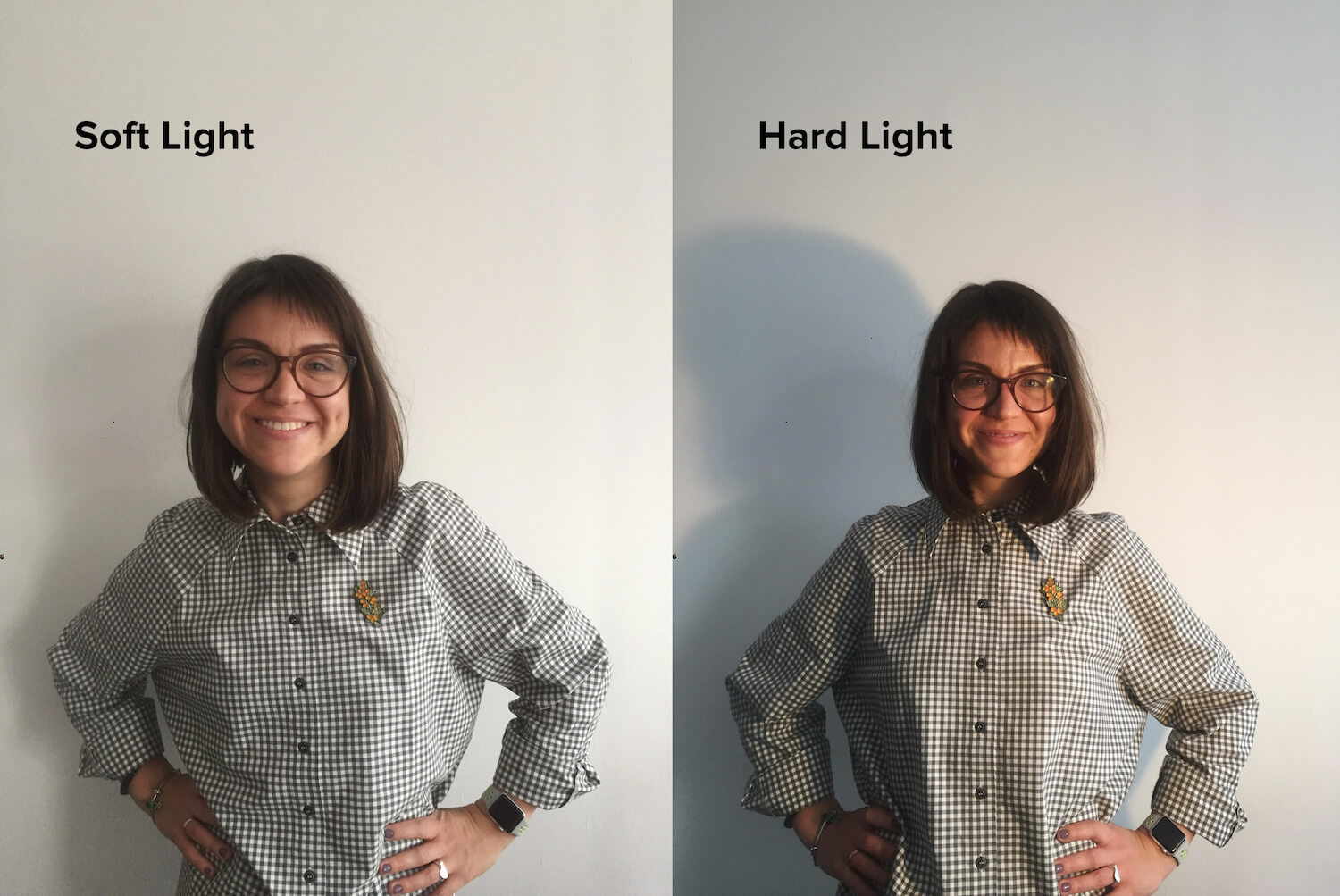
 Lighting affects camera techniques in moving image in a dramatic way, the use of lighting can help to cover up unintended things that could've happened on set. Without correct lighting, any shots filmed would likely either be over exposed or under exposed. Low-key lighting is different from the usual 3 point set up by using only one source of light, this creates contrast; this is similar to hard lighting (also known a direct point) which creates a dramatic effect and casts more defined shadows this occurs when the lighting source is greatly smaller than the subject. These types of lighting can be good to create connotations of paranoia and fear. Soft lighting is created when the lighting source is bigger than the subject and is created with multiple light sources. This form of lighting creates lower contrast and less shadows, soft lighting often creates connotations of happiness. https://movingimageeducation.org/create-films/production/camera/lighting